
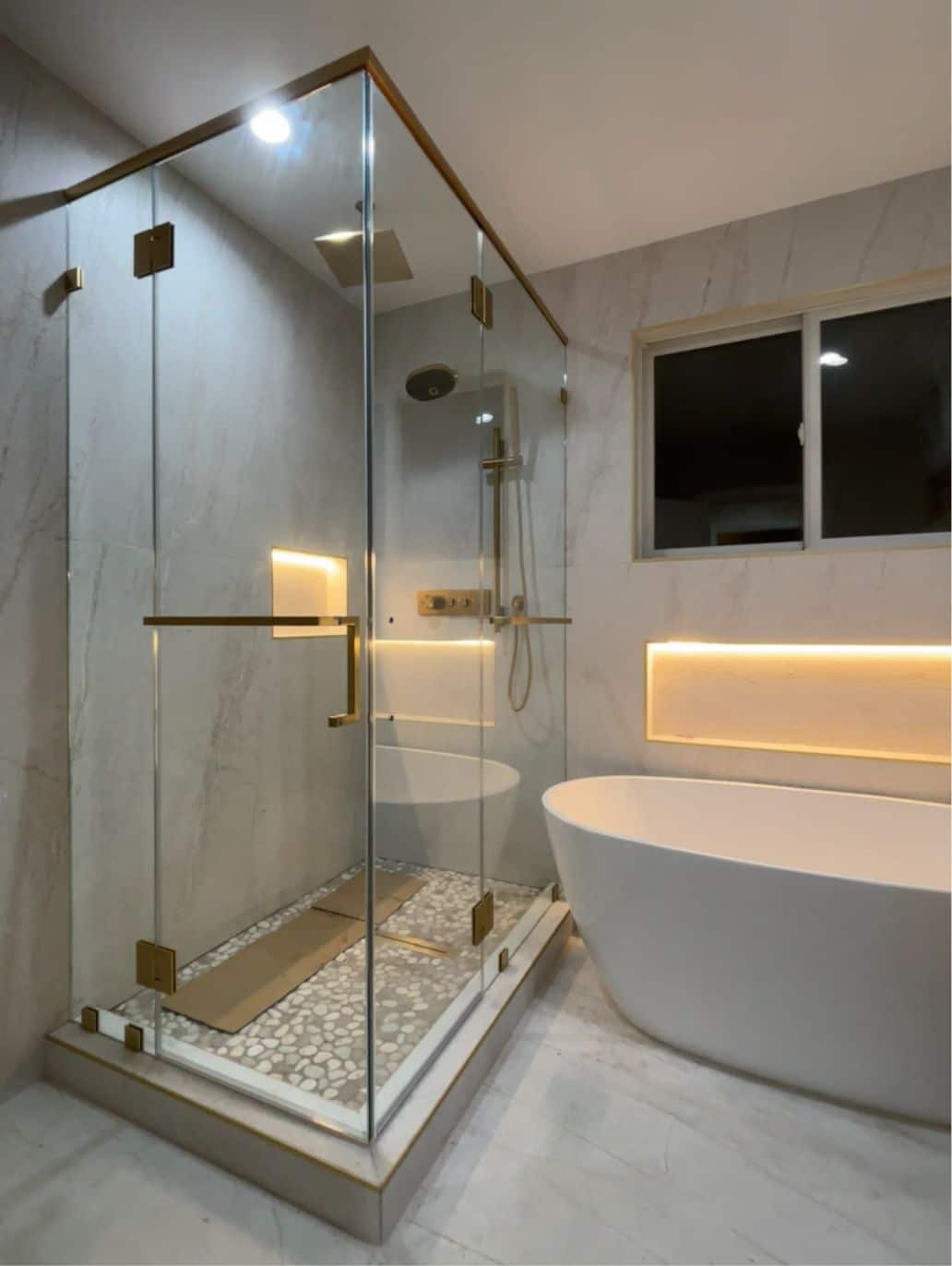
You bought a shower door. Somehow it has applied for a second job as a resistance machine. Opening it now involves a little lift, a determined pull, and the facial expression usually reserved for assembling a flat-pack dresser.
If your frameless shower door is rubbing, catching, or hard to close, don’t force it. Locate what appears to be interfering, leave the hardware alone, and arrange an inspection. A change in how the door moves is useful information, even when the cause isn’t obvious.
First, name the thing that’s catching
A flexible plastic sweep brushing the threshold and a glass edge striking tile are different situations. You can describe what you see without deciding which part needs replacing.
- At the bottom: Is a clear strip folded, loose, or visibly caught against the threshold?
- At the closing edge: Does the door appear to meet a seal, another glass panel, or the wall?
- At the hinge side: Is there an uneven gap or a piece of plastic out of position?
- Over time: Did the resistance develop gradually, appear suddenly, or start after a seal was changed?
Look from outside the enclosure. Don’t keep opening a door that is catching just to make it perform for the camera. It has already made its point.
The Allen key can sit this one out
A changed closing angle, a displaced seal, and a door that has moved in its opening don’t necessarily call for the same fix. Buying a thicker strip or turning whichever screw looks most available can make the original clue harder to follow.
Hardware and clearance requirements depend on the assembly. C.R. Laurence’s seal profiles and clearance guidance show why a strip should be matched to its application. Looking approximately right in an online thumbnail is a modest qualification for a replacement part.
Leave hinge adjustments and glass repositioning to a qualified shower-glass technician. Don’t lift the door by its handle to make it clear the curb, loosen the hinges, or try to file a glass edge.

When to stop using the enclosure
If glass is contacting glass, tile, or metal, a hinge or panel appears loose, or you notice a chip or crack, stop using the enclosure and arrange professional inspection. Keep others from operating it.
Manufacturer glass and hardware inspection guidance emphasizes alignment, secure attachment, and damage checks. Your technician should identify the actual hardware and follow its instructions; there isn’t one universal adjustment for every hinge.
Send the clues, spare the workout
For a service request, gather these views without moving an unsafe door:
- A wide photo showing the whole enclosure.
- A closer photo of the area that catches, with enough surrounding glass to show its position.
- The hinges and bottom clearance, photographed from a safe position.
Add a short description of what changed and mention any recent seal replacement or adjustment. An existing video may help, but don’t recreate the problem to film one. Photos help plan an inspection; they don’t promise a diagnosis or a particular repair.
If escaping water is the main issue, our shower-door leak checklist covers those clues separately.
Contact Affordable Frameless with your photos and observations so we can help determine the next step. Your shower door can retire from strength training. So can you.

HELPING TO IMPROVE SPACES
Affordable Frameless Shower Doors team of professionals brings decades of construction and home remodel experience to you living spaces. Attention to detail is vital for shower glass and we pride our selves on consistent and professional fabrication and install every time.
